
Tag: Management

  • The Management Corollary

    OK- I have several other things I’d like to discuss: some thoughts from my current reading material, First, Break all the Rules and some thoughts on the UK’s announcement that it will probably withdrawal from Gemini and what it means to the Observatory, for example, but I thought I should close out my bit on the Scientist Dilemma and the Management Corollary from my 2008 SPIE paper first. Here, then, is how I introduced the Management Corollary in that work:

    Scientists are not usually trained as mangers and managers are not usually trained as scientists. There are some talented people who can play both roles, but rather than relying on the exception, it is safer to plan for the more commonplace scenario.

    Like software engineers, professional managers exist for a reason. They are trained in evaluating personnel, logistics, scheduling, fund-raising, etc. — all things not usually found on the transcript of your average scientist. On the other hand, they are not always well-versed on the science of their missions and less able to make well-informed compromises between a project’s logistical and scientific needs. The Large Synoptic Survey Telescope project is addressing this problem by putting both a trained scientist and an experienced manager in each management box of their organizational chart. This approach seems sound and time will tell how well this works, but the important point is to recognize that science leadership and management leadership are two different things and it is rare to find someone sufficiently effective in both.

    One of the first images of an extra-solar planetary system from Gemini Observatory.  A result like this requires great efforts by individual scientists and project management to make happen.
    One of the first images of an extra-solar planetary system from Gemini Observatory. A result like this requires great efforts by individual scientists and project management to make happen.

    Now I am going to venture off into even more generalizations – a habit which often gets me in trouble – but I think the generality addresses a point that we need to address. Compounding the problems described above even further is that scientists and engineers are often actually resistant to even the idea of management. For one, our lengthened education and noble “search for the truth” sometimes makes us feel that our efforts are above the need for management. Second, most of us went into science and related technical fields to actually do things; not manage things. If we wanted to manage things, we’d be wearing our pressed-shirts and jackets, working 9-5 and making more money (I know that’s not fair to the “real-world” managers out there, but hopefully you see my point). Our rewards and training have both been for doing things, not managing others to do things. Those who don’t do are often looked on as necessary, at best (and usually not even that), and certainly with a little disdain as well. Let’s face it, as a group, we don’t respect management. We feel our motives and aspirations do not require management and we want do to things – in line with our own vision of how to reach the truth – not manage things, or worse, be managed to do things.

    So where does that put us? We are not trained as managers, we don’t like to manage, we don’t like to be managed, and we don’t really even respect the field of management, yet we work on projects costing untold amounts up to hundreds of millions of dollars and involving communities of thousands of users across multiple countries and cultures. I’d say there’s a lot to be done to improve the role, visibility and contributions of effective management to astronomical projects at all points in a person’s career – from school education through project initiation, completion, and operation. Granted, there are many good managers in astronomy and most large projects appreciate and exert good management, but management in astronomy still has a deeply seated reputation problem and we have still have many managers who continue to try to do rather than facilitate others to do. So here again is part of the reason for this blog – to talk about the role of management in astronomy and to discuss how to best find and employ the experiences and talents necessary to complete large astronomical projects as efficiently, accurately, and completely as possible.


    Like most managers in astronomy, Scot didn’t start out thinking he’d end up managing astronomical projects (pun intended), but has found it a nonetheless interesting career path. He still tries to do, from time to time, and is currently working on a new catalog of White Dwarf stars which will about multiply the number of known white dwarf stars by a factor of two from the last catalog and a factor of 7 from 5 years ago. Although this desire to still occasionally do may make him part of the problem described above, he thinks some commitment to doing is healthy and can directly contribute to a astromanger’s management success, an idea for another post, most likely.

  • Astronomy is a Business

    I had intended to follow-up my last post on the Scientist Dilemma with one on what I call the Management Corollary. However, events this week have me thinking on a slightly different, but related tack that I think will be worth exploring first. It will help pave the way for a more in-depth look at the challenges of astronomy management later.

    Astronomy is a business. Well, maybe not all aspects of it, but these days, astronomical facilities like observatories are a business. There are now multiple options in all size ranges – from 1m to 30m diameter telescopes. Institutions and countries with money to invest in facilities have multiple selections from which to choose. How then, do they choose where to invest? They look for the facility that offers the best product for the least money. That sounds like a business to me.

    This situation is a relatively new state of affairs. There are more 8-10m class telescopes than there are 4m telescopes. (Well, it depends a little how you count then, but the numbers are at least comparable.) For the next generation of telescopes, we have at least the TMT, GMT, and E-ELT to choose from. If you’re a government looking to provide the latest resources to your astronomers, you have choices. And once again, you would obviously choose by attempting to maximize the value you get for your money.

    This state of affairs means observatories must work to provide a better product for a lower cost if they hope to continue and grow with time. Many scientists and engineer types don’t want to think this way. They don’t want to be bound by business-world processes and instead prefer to think of themselves as above the fray – engaging in pure research for the sole sake of expanding human knowledge. This goal is indeed noble, but you can’t do research without money, and sitting through the Gemini Board meeting last week, it crystallized that you don’t get money if you don’t offer value your competitors don’t.

    2009 is the International Year of Astronomy - another example of astronomy as a business, promoting itself to the general public.
    2009 is the International Year of Astronomy – another example of astronomy as a business, promoting itself to the general public.

    Ours is certainly a business that includes a research function, but like all high-tech businesses, the research aspect is but a part of the business and its focus better be aligned with the business’s mission and market needs. An astronomy facility that doesn’t innovate and keep pace with technology will not survive. Technological research is a vital part of its mission, but it is not the mission itself.

    This state brings up the Scientist Dilemma from a different angle: our facilities need active research and technical development to stay competitive, but they also need to do so at as low a cost as possible. Thus, an observatory wants scientists to innovate for the observatory, not for themselves. The observatory wants scientists to continue to expand and improve the facility’s capabilities, but wants to do so efficiently. Publishing papers internally, for example, does little to increase an observatory’s market value. But if an observatory doesn’t support their scientists publishing papers, a) they won’t be able to attract scientists in the first place, and b) they will lose innovation that benefits the observatory’s market value by having researchers push the capabilities to the limit as they develop new techniques and tools for their research. In other words, it is a careful balancing act that must be done to stay competitive. The choices that are made to balance cost efficiency and internal research and development are critical to an observatory’s future success.

    Finally, as a slightly different take on what I think is actually the same topic, I offer a link to Jim Gunn’s famous diatribe on the HST mirror disaster. I believe one thing Jim is saying here is that as astronomers, we need to take responsibility for both the research and the business side of our projects, lest we become vulnerable to our fate being controlled by people who do not understand the full picture. I’m not sure I agree with his view on national facilities, but perhaps that’s a topic for another post some day.


    Scot has actually never found the concept of astronomy as a business difficult to accept. Its product is science and knowledge, instead of something you can buy on late-night TV, but the parallels between commercial businesses and astronomical facilities are easy to identify. He enjoys reading management books, as well as astronomical treatises. Current in-progress books include “First, Break all the Rules” and “Dark Cosmos: In Search of Our Universe’s Missing Mass and Energy”.

  • Alfred P. Sloan and a functional management model for Gemini

    As I discussed in my last post on matrix management, Gemini appears to operate in more of a functional vs. a matrix management approach. The perceived principal drawbacks of the current approach is that overall project accountability is diffused and internal project handovers can be confusing and inefficient. In my previous post, I argued for a relatively small change in practice to move to a more matrix management structure. Here, I will explore other small changes in an attempt to establish a more
    functional functional structure.

    While the status of General Motor’s financial success is no longer so glamorous, I will use the early days of GM as a possible model for Gemini. GM was built by acquiring multiple companies that all had roles to play in the manufacture and sales of automobiles. GM consisted of companies that produced tires, batteries, electronics, car bodies, etc., as well as the companies that sold their end product to consumers (Chevrolet, Oakland/Pontiac, Buick, Cadillac, etc.). Having all the dependencies needed to make a car in house under its own control was thought to be of significant strategic value to competing in the marketplace.

    Initially, however, the expected efficiency results were not realized. Alfred P. Sloan, manager of GM at the time, realized that the organization’s structure was actually stifling innovation and efficiency. If, for example, Delco learned to make a better, cheaper radio to go in next year’s Pontiac, it was Pontiac who ended up selling more cars at higher profit, not Delco. In other words, Pontiac ended up with the credit for Delco’s innovation and Delco quickly lost the desire to innovate since it received none of the credit for its improvements.

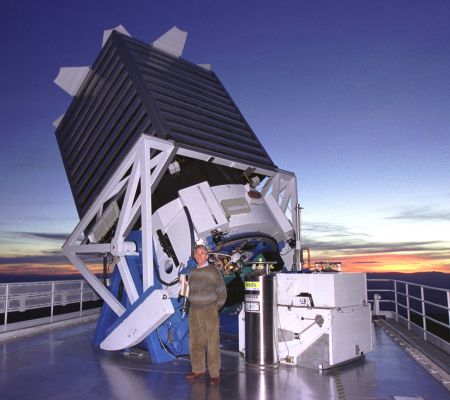
    John Peoples, then SDSS Director, and the Sloan Digital Sky Survey Telescope
    John Peoples, then SDSS Director, and the Sloan Digital Sky Survey Telescope

    Sloan therefore changed things so GM’s car manufacturers actually had to buy its needed components from GM’s internal suppliers. Now if Delco made a better cheaper product, Delco’s finances would improve as well as Pontiac’s. Each division’s contributions to the end product were now more clearly identified and the incentive to innovate and improve returned. GM enjoyed incredible success with this model until it was changed decades later by perhaps less-effective management than Alfred Sloan.

    So how does Sloan’s approach correct the problems I stated earlier with the functional management approach? The accountability problem is addressed by increasing the visibility of each Division’s contributions to the project. The project manager or other interested overseer can readily see how each group contributed to the overall project. The project manager maintains accountability and control by having to negotiate for her needs with each external division head, essentially issuing internal contracts to provide needed project services. As a result, the miscommunications and handover issues that happen when project responsibility passes from one division to the next disappear because these interfaces are forced to be better-defined in the more formal relationship between divisions. Information transfer might still be lacking, but if the divisions are separate enough, that may not be a problem.

    Is Sloan’s GM an appropriate model for Gemini? While perhaps a viable model, it is probably not the most appropriate. Too much time, and too much cross-disciplinary expertise would be needed to properly specify the requirements for external division work. Currently, we make use of the skills that exists in other divisions to help establish the needs and requirements of our projects. To adequately scope a statement of work for the electronics component of a project would likely require more engineering expertise than Development has, for example.

    A twist, then, could be to have each Division responsible for determining their own set of requirements, covering the aspects of the project for which their skills are needed only. An internal virtual contract would then be let and each Division would control their own work. In the end, though, this twist ends up being very similar to the semi-functional approach we have now. Overall project accountability remains diffuse.

    So what about the successful Gemini integration of Flamingos-2? While the verdict is still out on the overall success of this instrument (it is still undergoing on-telescope acceptance testing), its integration into the Gemini environment has to date gone quite smoothly. Part of the reason for this success was the relatively early involvement of Engineering and Science in the Development project. Another was the dedicated effort each functional team invested to make sure their part of the project was successful. A clearly functional effort, is this the model for Gemini? Functional accountabilities with early involvement? A pseudo-matrix management approach?

    Perhaps. Or perhaps we could evolve a bit more and continue to blend responsibilities and roles in a more matrixed approach. I think the Flamingos-2 functional approach can work, but I feel there’s more potential for true high efficiency with the matrixed model. Teams working together with joint accountability seems the higher efficiency model, although it is certainly not the only possible successful one. On the other hand, if you happen to own a Pontiac, you may be wishing for a return to Sloan’s GM.


    While working for the Sloan Digital Sky Survey, Scot started researching Alfred P. Sloan, his years at GM, and the origins of the Sloan Foundation. He was always amused when Hirsch Cohen, from the Sloan Foundation would introduce himself as being from the “other Sloan”. He is still amused whenever he has the opportunity to use facility plumbing manufactured by the (unrelated) Sloan Valve Company. He also views John Peoples, pictured above, as an incredibly effective manager who brought the SDSS through some very tough times by careful use of the right management tool at the right time.

  • Is Gemini really a matrix-management organization?

    We’ve been thinking about ways to improve the instrument development process at Gemini lately, so I started to think about our management style- matrixed or functional? ….

    Gemini describes itself as a matrix management organization – where cross-divisional project teams lead and complete their projects together. This approach is in contrast to one of functional management, where divisions take care of their own projects, communicating with other divisions through their Heads, only when necessary. In the matrix management case, employees are functionally managed by their Division head, but operationally, they report to multiple project managers as well. In the functional management case, employees report to their Division heads and inter-divisional coordination happens at the management level only. Management is functional, not operational.

    While most Gemini internal projects employ resources from more than one functional area, suggesting a more natural matrix-management model, they are in fact managed quite functionally. Requests for exo-divisional resources are made in the planning process, approved by Division heads, while task management and project definition are often separated along divisional boundaries. Projects like new instrumentation get divided up into Development (deliver an instrument to the Observatory from the vendor), Engineering (prepare Gemini to receive the instrument and manage acceptance testing), and Science (prepare Gemini to operate the instrument and manage commissioning). Non-Development resources are being assigned to Development projects, but their tasks are often being managed by their functional division, not by the project. To me, what I just described is functional, not matrix, management.

    To be fair, Gemini’s approach is at least partially matrixed. Development, for example, does employ one software division employee, functionally managed by software, but project/operationally managed by Development. When Development made this change, we immediately improved our ability to make our software deliveries. A contrary example, however, is the software integration of Flamingos-2, which was successfully handled in a more functional style.

    The first light image from Flamingos 2 at Gemini South.

    First light image from Flamingos-2 at Gemini South.

    One strength of our apparent functional approach is it gives ownership and accountability of each aspect of the project to the division doing most of the work. One disadvantage is there is no one person or division accountable to the Director for the project’s overall success. Another disadvantage is that where there are boundaries and hand-offs, there are often miscommunications and unclear procedures. Finally, any internal expertise gained by the first division in a project is essentially lost when the project is handed over to the next division.

    If we really are to become a matrix-managed organization, we need to start breaking down the barriers that exist between divisions and increase communication between project managers and Division heads. Although individual project managers may not have the hierarchical authority to command resources external to their own division, they share a common goal within the Observatory to have a successful project and can realize this success by involving division heads and assigned resources in forming their project plans. If a single person is held accountable for the success of each project, it is up to that that individual to obtain the needed resources, or go back to the Division head for help, if necessary.

    In a true matrix-managed Gemini, resources assigned a project would report to their own Division head for functional support, but to their project managers for operational support. Meanwhile, project managers should hold regular status meetings with their stakeholders, including the relevant external Division heads and managers. These meetings and progress reports will help the external managers feel comfortable that their resources are being properly employed and build ownership for the overall success of the project across the Observatory.

    Gemini can become an effective matrix-managed organization if it wants to – simply by holding project managers accountable for their project’s success, and increasing communication and involvement between divisional and project managers. We have to start thinking and working like a team and not like a collection of divisions unwilling to pin our own success on that of another.


    Flamingos-2 is a multiple object near-infrared imager and spectrograph now undergoing final on-telescope commissioning at Gemini South. Its integration into Gemini has gone very well and is a testament to the hard work and dedication of both the University of Florida team, and Gemini Engineering and Science staff. The first light images are stunning and Flamingos-2 will only get better when Gemini’s Multi-Conjugate Adaptive Optics system gets installed in the coming coming years at Gemini South.

    Please see my standard disclaimer in the About page.