I just started a slack community for people freelancing in astronomy. Could be other industries as well, but for now, I’m sticking with what I know. I hoping it’ll be a community of contractors to support getting people going in this route and support people throughout their careers.
I was just relating to a colleague the other day how I find this whole pandemic working from home thing beneficial in certain ways. True, I have more meetings. tiring zoom meetings, than I ever had, but generally outside of my meetings, my time stays mine. People tend to hold things for our meetings, or they deal with things themselves that they might previously have come through my open office door with. There also seems to be a more general awareness that our non-work life is going to intersect with our work life, so there’s less expectation, generally, of immediate email response as well. I’m finding it easier to put my email aside for longer periods of time while I concentrate on a specific task or project without drawing people’s ire.
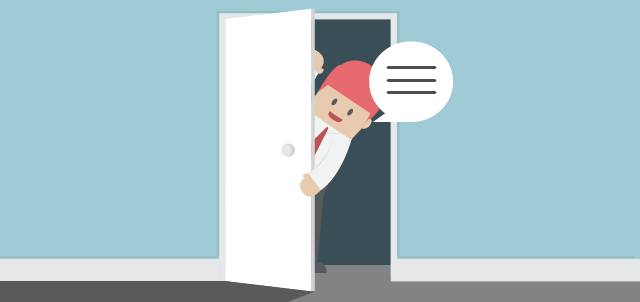
Open door policies have good intentions and several benefits, but they also have some significant drawbacks. For one, they essentially say that your interruption is more important than my otherwise planned work. All the time – without exception. Yes, you can close your doors at times, or respond to an interruption with a statement that this isn’t a good time, but the general expectation at the office was anyone can go see anyone at any time and get a response right then and there. Not only does that devalue the work of the one interrupted, it can also be disservice to the interrupters who don’t derive the benefits from spending a bit more time on their problems and discovering the solutions themselves. Even in the pre-pandemic world, when someone you wanted help from wasn’t in the office when you needed, you usually went back to your own office, googled for a bit, sketched out some ideas, and generally found the solution you were looking for on your own. Would have it been easier or faster to get the answer from your absent colleague? Yes, perhaps, and in some cases that is indeed the right thing to do. But in other cases, it’s just not.
From 3 Easy Steps to Establishing an Open Door Policy That Really Works with some good suggestions, but mostly missing the point about the value of the interrupted person’s time. https://www.insperity.com/blog/3-easy-steps-establishing-open-door-policy-really-works/
I think the norms that have arisen around remote work have been good for abating the rise of an unhealthy interruption culture. People don’t interrupt unless they really feel they need to, tending normally to figure out the issue on their own or store it for the next scheduled zoom meeting. This, I think is the intent of the open office policy – I’m here to help when you really need it, but it’s that when you really need it that tended to get lost and people sought others’ help whenever it was convenient, not whenever it was really necessary. I want to hear from you and an open door helps make that possible. I also want you to spend some time with your problems and own your solutions and I have my own work I’d like to complete as well. Open doors don’t help very much with the latter two objectives.
So now, even though I have fewer free hours in a day, I can generally use those hours more effectively than I could in the office. I have time to think; time to do the important, but not urgent; time to get into a state of flow and stay there for a while. None of these things are possible with the usual daily interruptions of an open door in the office.
There are lessons here for the eventual return to office. I’m leaning more towards the concept of office hours rather than open door. I’ve considered that before, but this pandemic experience has really demonstrated the value of that approach. Stop looking for the quick answer that disrupts someone else. Work through the problem on your own, seek help when you really need it, and let others enjoy the same quality time for their work that you have for yours. Supplement this with scheduled time to talk to your colleagues and then really listen. Combined, I think these efforts could bring some of this work from home productivity back to the office.
Working from home, of course, has its own set of distractions and interruptions that don’t apply to the office, but having more occasions for uninterrupted time, even for an hour, is a big enough benefit that Scot would like to find a way to continue this once back in the office.
I’ve been reading the book Strengths Finder 2.0, by Tom Rath. Like one of my favorite business books, First, Break all the Rules by Curt Coffman and Markus Buckingham, Strengths Finders 2.0 relies on data gathered from extensive Gallup surveys to help the reader discover and understand their five (out of 34 possible) top strengths. The author’s premise is that we gain more by concentrating on our strengths than we do trying to improve our weaknesses.
In the end, I did not find my five identified strengths terribly enlightening. The premise that we should spend more time working on maximizing our strengths – both by strengthening them and by maximizing how often we use them – and less time improving our weaknesses, however, resonated with a couple other things I have been thinking about recently:
Performance evaluations: I think we spend too much time pointing out weaknesses and developing improvement action plans when we do annual employee evaluations. I would like to see people figuring out what went really well, why, and how we can set things up to realize similar successes in the future. That is, performance evaluation discussions should dominantly be about doing more of what we do best and not about trying to be a little bit better at what we do poorly. But then I get this nagging feeling that weaknesses are important to. Weaknesses make us blind to entire pathways of opportunity. Weakness make us fail to connect to people who think drastically different than we do. If all we did was capitalize on our strengths, we would reach a certain level of success quickly, but to transcend to the next level, I think, requires an understanding and embracing of our weaknesses.
Great leaders: All the great leaders in Bill George’s book, True North, went through at least one particularly difficult and personally challenging life-changing event on their path to becoming great leaders. George’s belief is that it is through life’s experiences that we discover our true north, our purpose and our reason for leading. Author Rajeev Peshawaria takes a similar approach in another book I enjoyed, Too Many Bosses, Too Few Leaders. While reading these books, I began to ponder: do all leaders need what George calls a “crucible” to be successful? If you do not have a life-changing event of tragic proportions, does that mean you cannot be a great leader? What exactly is the role of the crucible? Is there something else going on besides finding a passion to lead for a particular purpose?
I did not initially see how these two topics relate, although I have now come to think of the purpose of the crucible as the opening up and revealing a part of yourself that was previously unknown. George and Peshawaria’s main point is that crucibles give leaders a deep, personal drive that motivates themselves and others. To this, I agree. Yet, I think there is something more. What crucibles also do is sort of complete the package. Crucibles make potential leaders more rounded and complete in part by exposing their weaknesses and vulnerabilities. In revealing a sense of purpose, crucibles peel back the onion and uncover hidden parts of people’s psyches. What used to be personal blindspots become irresistible areas of development and opportunity. They often reveal a side of us we never knew we had – perhaps even a side we considered not only a weakness, but irrelevant.
The best leaders know not only their strengths, but also their weaknesses. They organize their primary roles to take best advantage of their strengths while partnering with others in their areas of weakness. They know that their weaknesses represent potential blindspots that, if ignored, hamper their ability to lead. They also know to not only work with, but to value people that are strong where they themselves, are weak.
George’s crucibles can help bring this clear sense of being incomplete, of seeing not only the value of our strengths, but the value of our weaknesses, as well. This awareness helps us develop those weaknesses and to find others around us to support our weaknesses while fostering a strong drive to develop and accomplish something meaningful.
Truly understanding ourselves is key to recognizing what our true strengths are. It helps us realize in what areas of work we are likely to excel. Truly understanding ourselves is also key to understanding our weaknesses and what aspects of our work we need to pay particular attention to and allow others to help us with. It helps us find opportunities we would otherwise be blind to. Understanding our strengths, supporting our weaknesses: this is beginning to sound like my paragraph on performance evaluations, yet it derived from studying a group of great leaders and their struggles.
Which brings us back to Strengths Finder 2.0. Yes, in terms of performance output per energy spent, maximizing our strengths is generally going to be more rewarding than improving our weaknesses. But that is not the whole story. It is the knowledge of our weaknesses, our real ownership of them, that allows an additional level of growth that takes us from being good leaders to potentially great leaders. Crucibles not only directly confront us with our weaknesses, they often expose a part of ourselves that we didn’t know we had. Sometimes this part of ourselves ends up being a weakness that perhaps is not quite as weak as we thought. We begin to appreciate the value of our weaknesses. That is, we are forced to re-classify what we may have previously cast off as not very important or useful, as something not only useful, but valuable. The very act of discovery both increases our own abilities in our areas of weakness and helps us to appreciate and value others whose strengths are our weaknesses. People that we might otherwise have not valued, we begin to see as key contributors to our mission. We begin to value, rather than shun, people who think differently from us. I believe these results are what transform George’s (and our own) generally good leaders into great leaders.
So, do you need a crucible to be a great leader? Perhaps not, but you do need to understand who you are, why you are, what you do well, and what values those different from you bring. A crucible is just a convenient, if sometimes painful, way to get that.
Fifteen years ago, Scot took a personality test and was most shocked not by his resulting personality type, but at one particular type that he clearly was not. He was amazed there really were people – both functional and successful – that were really this type. Today, he finds exploring that part of his own personality and working with others of that type, very rewarding and a key to working his way to being at least a good leader.
Who are you, if not your job or profession? I asked myself this question recently, and didn’t have an immediate answer. It’s easy to say I am an astronomer, or I am my job title, but what am I besides my job? What are you?
I’m sure for some people, this is an easy question to answer, but for others like me (an enneagram 3) who tend to identify themselves with what they do, it’s not as easy. Sure, I am a son, husband, father, brother, uncle, etc., but these don’t define me. They don’t make me me – with the possible technical exception of being a son, of course. 🙂
I am an adventurer. Yes, but no. I like discovering new things and I am usually up for an adventure, but I don’t really live for it. What else could I be?
I am an expert. No that’s both too arrogant and inaccurate. I have too many interests to really be an expert in any/many of them and although I want to learn how things work, I don’t feel I have to be an expert in them, so that’s not right.
I am an observer. There’s some truth in that, and not just as an astronomer, but it sounds too passive. I like watching things and noting how things work, but I don’t want to just watch things happen, so I need a more active description.
I an optimist. That’s close, but I don’t go through life looking for things to be optimistic about. I believe we can often make events good simply by choosing them to be so while other times, we can extract good from an otherwise bad event by studying it and working to do so. So, optimism is more of a tactic than a strategy for me.
I am an explorer. OK, that’s sounding better. It describes my interest in science and astronomy and includes key applicable traits of being an adventurer and an observer. I explore to understand how things (including organizations and people) work. I explore to learn how to make them work better; how to use them to do other things; and sometimes simply just to understand them. In the process of exploration, I’ll often take something I know and look at it from a different angle or do it in a different way. All this fits with being an explorer; it is, at least, the best I’ve come up with so far.
Beyond my attempts to peel back my own onion layers, what’s my point here? That each of us is more than our jobs and our professions and that by understanding both ourselves and our colleagues better, by understanding who we are besides what we do, we can better work with each other to create better environments for people to live and work to their potential.
So, who are you? And who are your colleagues? Are you working to help give them what they need to be themselves? Are you creating an environment where each of you can get the most return out of being who you are? Do your colleagues know who you are so they can do the same for you?
Scot’s been suffering from jetlag recently and this post arose as a result. He hopes, however, it still makes some sense and he wishes you all, whoever you are, a happy holiday and a great 2015.
Gemini has two Boards – the Gemini Board from the international partnership agreement and the AURA Board. It’s actually a bit (well, OK a lot) more complicated than this. The National Science Foundation (NSF) is Gemini’s Executive Agency. They collect and distribute the funds for Gemini from the Gemini partnership. They also provide the funds for the US part of Gemini. AURA is our Managing Organization and is basically responsible for the management of Gemini. They have their own board and a specific oversight committee for Gemini, the AOC-G. The Gemini Board is basically our governing body, being the representatives of the partner countries to Gemini’s operating board. If each of these agencies, boards, and committees wants a review twice a year, Gemini would (and quite nearly does) end up with a major review a month. This would be bad enough, but as you can imagine, with so many organizations, boards and oversight committees, it can get a little confusing figuring out who is responsible for what and to whom. The lines of control and authority are blurred and complicated. The Gemini Board sets Gemini’s direction, yet Gemini’s Director takes home a salary provided through AURA. The reviews from the different groups in the observatory’s governance structure often end up commenting on the same aspects of the observatory while leaving other aspects untouched. In some areas, everyone wants their piece of the action, to have their say, while other aspects escape without much scrutiny at all. Overall, it’s a recipe for confusion and disorder.
The Gemini Partnership Agreement specifies the general roles of the Gemini Board, the Executive Agency, and the Management Organization. but of course not those of each of their boards and oversight/review committees. So, even if everyone read and understood the Partnership Agreement, there would still likely be confusion. The Partnership Agreement and Management Organization’s contract will be up for renewal soon (~2015) so we have an opportunity in a few years to simplify this whole structure and come up with an organization that has clearer and cleaner lines of authority and responsibility. In the meantime, though, we still have to make things work a little better than they do now. The unclear lines of communication and authority are hindering us from becoming a true high performance organization with a single team able to focus on a common mission.
Balancing Gemini's Boards takes some care and thought, but should not be too difficult if can agree on a clear division of roles and responsibilities.
In their book, Corporate Boards: New Strategies for Adding Value at the Top, authors Conger, Lawler, and Finegold define the primary roles of the corporate board as follows:
1) giving strategic direction and advice
2) overseeing strategy implementation and performance
3) developing and evaluating the CEO
4) developing human capital
5) monitoring the legal and ethical performance of the corporation
6) preventing and managing crises
7) procuring resources
With only a little study, these 7 roles divide up fairly nicely to those potentially of the Gemini Board and those of the Managing Organization. The Gemini Board represents the partnership’s interest in Gemini. AURA and its boards/committees represent Gemini’s management and staff. A natural division, therefore of these roles would assign #s 1, 2, 6, and 7 to the Board and #s 3,4, and 5 to AURA. This division of roles lets the Gemini Board concentrate on strategy and resource procurement (partners, development funding, etc.) while AURA concentrates on human resources and legal operational issues. Allowing AURA the time and focus to concentrate on developing, evaluating and supporting Gemini’s human resources would be a nice benefit to this approach and would help Gemini develop and keep its best home-grown talent for future roles within the Observatory.
This division of roles also allows the opportunity for the Gemini Board to review AURA’s performance and, if we’re really being open to new ideas, to have the AURA Board, or even better, an NSF (our Executive Agency) review committee, evaluate the Gemini Board’s effectiveness. Each Board reviews Gemini in the areas of its domain, and each Board (and/or the NSF) reviews the other Board to keep everyone honest and help ensure everyone is working as optimally as possible, together, to push the Observatory forward. This sort of separation of powers is very consistent with the responsibilities of the Gemini Board, Executive Agency, and Managing Organization detailed in the partnership agreement. The Board is given the fiscal and strategic responsibilities for the Observatory as well as oversight/review of the Managing Organization. The Managing Organization is given the responsibility to develop management plans, employ key Gemini staff, and carry out Board decisions. They are thus also the likely choice for the roles of top personnel development and review within the Observatory. The roles I’ve defined could easily be agreed upon now with only a slight extrapolation necessary from the partnership agreement, and formalized, after some time to see how it works, in the next partnership agreement.
These are interesting times for Gemini, perhaps even more so than on average. Scot hopes discussions like this one happen often and broadly while we discuss and form the structure and organization of Gemini into the next decade.
I look younger than I am. I hear this a lot when people find out (or ask) my age. People seem surprised to find out how old I am. I’m never quite sure how to take this, though. The vain part of me considers it a compliment that I look young. The achiever part of me wonders if people think I either act young (and wonders if that’s “good or bad”, if so), figure I should know more than I do given my age, or are wondering what someone of my age is doing “only” in a position like this. The latter thought has me thinking about career paths in general as well as my own journey that brought me to where I am now.
It seems there are two ways to “rise to the top” at an observatory (and probably elsewhere). You either stay with the company for years and go through multiple positions as you climb that proverbial (and unfortunate, see an earlier post) organization ladder. Or, you stay at some other company for years, then get hired in the next level up at a new company.
My career path doesn’t really lend itself well to either of those two scenarios. Pretty much, at each new position I’ve had, I have tried to do something new, learn a new part of astronomy/the astronomy business that I hadn’t before. These choices have given me a lot of experiences that I find very useful everywhere I go, but they haven’t made me a traditional expert in any particular area.
I guess it started with my first post-doc position. In graduate school, I studied pulsating white dwarf stars. My first post-graduate job, therefore, was as the only Ph.D. scientist on site at a solar observatory. A natural progression, right? Not really, but it was an interesting one.
From there, I went on to run operations for a global network of pulsating observers (OK, this position was directly related to my graduate work), then ran nighttime operations for an extragalactic sky survey, managed the Instrument Division at a major (foreign) observatory, then came to Gemini, my current place of employment, where to date, I’ve worked largely as a project manager for new instrument projects (with external procurements and internal work packages).
Each job I’ve held has pretty much led naturally to the next and it’s always interesting to review the chance circumstances and events which resulted in each new position, but it’s clear I’m not on a path to be an expert in any particular field. I was trained as a scientists/research/instrumentalist. All those skills are important for what I am doing now, but I’m not necessarily honing them in the process, either.
I do believe I am gaining breadth, though, and while I find myself envious of those that have stayed in one field and developed an incredible level of mastery, I am also pleased with my ability to speak at least somewhat intelligently, and from some direct personal experience, about software development, international project management, telescope proposal writing, observatory/project operations, instrumentation, multi-cultural work environments, machining, team management, contracting, and etc. I’ve done a bit of each of these as part of my previous set of jobs. And while I would love to be a detector expert, a certified project manager, or a builder of 8m-class instruments, I chose a career path (or perhaps, a career path chose me) that favors breadth of experience over individual mastery.
I’m not sure where I’m headed next, but I can see that my management tasks benefit from my broad experiences. Whether or not they’d benefit more from a more specialized expertise, I can’t say.
I’m not saying that my career path is what’s best for what I’m doing, or that there even is a best career path. I’m just sort of thinking out loud and realizing that we all have choices to make in how/if we choose to specialize versus generalize. Both are effective, fulfilling paths, and while mutually exclusive at any given time, can be combined over time, when the environment seems right.
Scot intends to continue to learn more about the subfields within which he works and may eventually even learn enough to say he knows what he’s doing! Although, if that ever happens, he’ll probably move on and try something else, alas.
Well, it’s been a year now since I started this blog. I thought I should commemorate the occasion by writing something deep and reflective. The problem is, I’m not very good at deep and reflective. So, you’re stuck with this post instead.
A close friend of mine used to call me Mr. Spock, a nickname I was both proud of and resentful of. I was pleased that my friend thought me logical, efficient, direct, and striving for optimization, all like Mr. Spock. I was a bit bothered that he presumably also thought me lacking of emotions, the other defining characteristic of Mr. Spock.
I realized, though, that like Mr. Spock, I grew up thinking that my feelings and emotions merely got in the way of getting things done. (That my personal focus was/is on getting stuff done and not on feeling good, or making meaningful bonds with other people, etc., is another interesting note that will have to wait for some other post- maybe this blog’s second anniversary!) If something had to get done, it didn’t really matter what I thought of about it – it still had to get done. What I came to realize, perhaps intuitively, and perhaps as a mechanism to keep the focus off me, was that the feelings and emotions of other people did matter to them getting things done. If I wanted to do things that involved more than just me, I had to take the feelings, emotions, desires, and needs of others into account.
I started learning about what was important to others completely unaware of what I was doing. For one thing, focusing on other people kept them from focusing on me. I’ve always done things like ask my barber how she got started cutting hair, how she decided this is what she wanted to do, how she handles doing a hair cut the customer requests, but which she doesn’t like, …. I didn’t consciously teach myself to ask questions like these – it was just part of who I was. People love to talk about themselves, and it helped me in that I didn’t have to.
Happy First Birthday to astromanager.net!
Later on I realized these sorts of questions, and the insights they offer, are exactly some of the keys I needed to have to be a better manager. Strangely enough, not everyone is like me, so if I’m going to get the best out of people, I have to understand their needs and desires. I have to be sensitive to their feelings and moods. I can’t treat them as chess pieces to be placed on the board in a winning position if they don’t want to be there.
There wasn’t really a particular day or moment when I realized these things; as I said before, I found myself naturally doing some of them way before I ended up managing people and projects. But I will say that as I gradually learned to pro-actively use this approach as a regular way of interacting with people, I became much more effective. (I also learned to build better relationships with people. Imagine that.)
Simple concept, really- learn what people want and find ways to help and enable them to get it.
Management, though, is full of simple concepts, yet we don’t always follow them. The tradition hierarchy of executive privilege, need to know information, top-down decision making, and etc., all violate these simple concepts. Yet they have often been so instilled into our consciousness of what management is, that we can all too easily forget about the people side of management, and we end up blindly following these rather unnatural techniques of the past.
So, part of my reason for writing this blog has turned out to be to remind myself of these obvious tenets of people and project management. And like most things I do, if I can save others time by offering something I’ve done, then the return for my time spent has increased and I’ve made Mr. Spock proud by being even more efficient.
While this blog is helping Scot be more like Mr. Spock in terms of optimization and efficiency, he’s still working on distancing himself from Mr. Spock’s dry, emotionless nature. His 8-month old daughter is certainly helping in this regards and although he hopes she grows up to know and love Mr. Spock, he hopes she doesn’t completely identify him with Daddy.
I was reviewing some notes from a colleague’s previous class on project management when I came across the following lines that caught my interest:
A business or organization cannot survive on project management disciplines alone.
Project management is defined as delivering to time, cost, and quality.
Staff development is seen as an overhead if converted to a project cost, but [is] essential for an improving workforce.
Employee development, morale, work/life balance, and even preventive maintenance/upgrades: these are all long-term needs that can easily be viewed as short-term distractions in a project-oriented culture. It is clearly of little or no benefit to a project manager to use valuable schedule and resources on these kinds of activities. So, this is where the functional (line) managers need to step to the plate. They are the ones that have the responsibility to provide a talented, skilled, stable, and motivated work pool to the project managers. They have to be the ones to make sure their staff development needs are met. They are also responsible for the basic functionality of the systems under their control. Thus, time for both staff development as well as system upgrades and maintenance must be reserved and held back from project allocation.
I’m not saying that these project equivalents be considered sacred cows or anything. The resources spent in maintaining a well-adjusted, skilled staff need to be justified in terms of losses that would result from the expected turnover if these employee needs weren’t met. Similarly, system upgrade and maintenance task resources need to be justified against the potential lost time once they fail or need to be replaced. But in any case, the responsibility for forming and advocating these projects must be with the employees and their functional, not their project, managers.
Not a really complex or novel thought here, but just another indication of a need for intelligent and thoughtful management that clearly understands its roles and responsibilities.
Scot’s graduate advisor, R. Ed Nather, has been known to say:
If it goes without saying, better say it twice.
As time goes on, Scot finds more and more wisdom in that statement and applies it often. Defining people’s project and functional roles is a great example of the value of explicitly stating what everyone often implicitly assumes without checking to make sure everyone else is operating under identical assumptions.