Tag: Productivity

  • Innovation and working from home

    It’s hard not to be confronted these days with arguments on both sides of the working from issue. In general, we’re seeing more employees desiring to keep work from home options and more CEOs and managers wanting to see more of their staff back in the office. Employees say they are more productive at home. Employers say the business is less efficient. What’s going on?

    Aftre reading an interesting HBR article on redesigning how we work (https://hbr.org/2023/03/redesigning-how-we-work), it struck me that employees feeling more productive at home and CEOs feeling their workers are less innovative when they are not in the office (and therefore overall, the company is less efficient) are actually the same thing. Employees feel more productive at home precisely because they are less innovative.

    Innovation is hard work. It requires synthesis of a number of different ideas. It dead ends far more frequently than it leads to new vistas. It requires energy and motivation to pursue. Innovation is inefficient — a distraction. Working from home eliminates a lot of the office distractions, allowing workers to get high quality focus time to complete their work without the extraneous ideas, thoughts, and counter-proposals that arise in an office setting. These distractions make it harder to get the job done while occasionally spurring meaningful innovation that drives the company forward with a sudden jolt.

    Many times the office dynamic just feels like too many cooks stirring the pot, like a buzz of activity for activity’s sake. Office employees are grateful for that hour during lunch or at the end of their day where they can actually get their work done. At home, that hour is actually the entire day and employees are indeed doing more in less time, just as they say they are.

    Meanwhile, CEOs have it right, too. Employees are doing their work, but not synthesizing new ideas and generating new ways of doing things. They get more done, but they have fewer chances to innovate and bring new ideas and new efficiencies to the organization because they have few chance encounters and conversations with diverse opinions and thoughts.

    The challenge, then, is to capture the best of both these worlds. Provide those working from home with purposeful opportunities to share ideas, motivate each other, and develop new problems and new solutions. Provide those working at the office with more high-quality, distraction-free time that they can control to focus on their work. With some purposeful thought, we can share the good from both environments, be both efficient and innovative, and hopefully move on to another water cooler topic.


    As an independent contractor, Scot generally works from home where he uses the variety of projects he is working on and ample breaks to expose himself to other ideas, fields, and people, to spur innovation. Comment below on what you do to be more innovative at home and more productive in the office.

  • How to easily send repeat emails

    Episode 14 of my Better Email Management series is now on YouTube. I discuss a few Gmail settings (that exist in similar form on most other email clients as well) I use to be more efficient. I conclude with an introduction of using email templates to have a set of canned messages you can easily add to your outgoing messages to save you from having to type the same thing in over and over again. Gmail uses templates for this and most clients have a way to use multiple signatures to the same effect, even if they don’t offer templates. Hope you find a tip or two here to help streamline your workflow.

  • Master Email Search

    I’ve posted a new addition (Episode 13) of my YouTube series and Better Email Management. This one talks about using search to quickly find your emails. Mastering search helps make your email sessions more efficient for a couple reasons. One, of course, is you can quickly and easily find an email you need to refer to, and another is a bit less obvious, but if you are facile at search, you don’t have to spend as much time thinking about how to store and organize your emails. Instead of creating a hierarchy of email folders or labels, and then having to remember what you did and how you handled an email that spanned multiple categories, you can just be confident that your searches will find what you need, freeing up your mind to concentrate on the work at hand, not the logistics of email management.

    I focus on Gmail, but other clients have similar search abilities, so do a search and find out what’s relevant for your client.

    Hope you find this helpful!

  • Turn off new email notification dots in Firefox tabs

    I decided recently to try out Firefox again as a daily browser, but almost stopped early in the process when I couldn’t see a setting to turn off the new email notification dots Firefox was placing on my email tabs. I don’t want those pings on my attention to constantly note all the new incoming emails, so I always turn all email notifications off. (See my Productivity blog entries and YouTube series for more on this.) A web search revealed a solution, but it’s not straightforward so I made a video about it and include the instructions here.

    1. Turn on the flag that enables customizations.
      new tab -> about:config
      search for UserProfile
      then set toolkit.legacyUserProfileCustomizations.stylesheets to true
    2. Find your firefox profile directory.
      Menu -> Help -> More Troubleshooting Information
      Find Profile Directory on page
    3. Go to your profile directory and create a directory named chrome if it doesn’t already exist
    4. Go to the chrome directory and create userChrome.css, if it doesn’t exist
    5. Make sure first line in userChrome.css is
      @namespace url("http://www.mozilla.org/keymaster/gatekeeper/there.is.only.xul");
    6. Add the following below the @namespace line
      /* Completely hide the "title changed" notification dot on pinned tabs */
      .tabbrowser-tab > .tab-stack > .tab-content[pinned][titlechanged] {
      background-image: none !important;
      }
    7. restart firefox

    Hope this works for you and you find it useful. I did this on Firefox version 88, but it should work for a range of versions.

  • Another class offering this October

    I just signed up with the UH Manoa Outreach College again to offer a one-day class this October. This one is scheduled to be in person, pandemic permitting. The College made a nice little writeup about the class here. It combines my general workplace productivity content including email and task management and priority setting, with a focus on balancing the urge to constantly do more with a purposeful effort to do less and free your mind from constant busyness. Hope I can see some of you there.

  • Online classes and a new YouTube channel

    I’m working with the Outreach College at the University of Hawaii at Manoa to offer a unique combination of my class content in a remote, zoom-like, environment. You can read more about it and sign up at their page here. I’ll be including most of my Email Management, Task Management, and Prioritization (Getting the Right Things Done) courses along with some of my newer Doing Less content. I’m looking forward to it and hopefully the first focus on productivity doesn’t dilute the ending message to slow down and take a step back from time to time too much. 🙂

    I’m also experimenting with ways to get some of these courses out to a broader audience, so I’ve started a YouTube channel. I’m starting it with my Email Management course content and some random other thoughts. Stop on by and let me know if you’ve found it useful. I need 100 initial subscribers to get a better URL and make my content easier to find, so if you feel like subscribing, it would be a big help if you could. I’m not going to beg for likes and subscribes in the videos themselves, but I would like them to be accessible to people looking for such content.

    Well, that’s it for now. Mahalo.

  • The pandemic and the unhealthy interrupt culture

    I was just relating to a colleague the other day how I find this whole pandemic working from home thing beneficial in certain ways. True, I have more meetings. tiring zoom meetings, than I ever had, but generally outside of my meetings, my time stays mine. People tend to hold things for our meetings, or they deal with things themselves that they might previously have come through my open office door with. There also seems to be a more general awareness that our non-work life is going to intersect with our work life, so there’s less expectation, generally, of immediate email response as well. I’m finding it easier to put my email aside for longer periods of time while I concentrate on a specific task or project without drawing people’s ire.

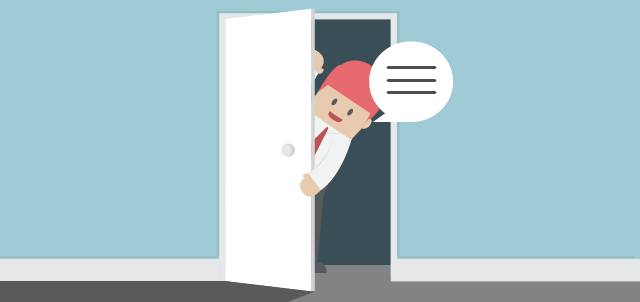
    Open door policies have good intentions and several benefits, but they also have some significant drawbacks. For one, they essentially say that your interruption is more important than my otherwise planned work. All the time – without exception. Yes, you can close your doors at times, or respond to an interruption with a statement that this isn’t a good time, but the general expectation at the office was anyone can go see anyone at any time and get a response right then and there. Not only does that devalue the work of the one interrupted, it can also be disservice to the interrupters who don’t derive the benefits from spending a bit more time on their problems and discovering the solutions themselves. Even in the pre-pandemic world, when someone you wanted help from wasn’t in the office when you needed, you usually went back to your own office, googled for a bit, sketched out some ideas, and generally found the solution you were looking for on your own. Would have it been easier or faster to get the answer from your absent colleague? Yes, perhaps, and in some cases that is indeed the right thing to do. But in other cases, it’s just not.

    From 3 Easy Steps to Establishing an Open Door Policy That Really Works with some good suggestions, but mostly missing the point about the value of the interrupted person’s time. https://www.insperity.com/blog/3-easy-steps-establishing-open-door-policy-really-works/

    I think the norms that have arisen around remote work have been good for abating the rise of an unhealthy interruption culture. People don’t interrupt unless they really feel they need to, tending normally to figure out the issue on their own or store it for the next scheduled zoom meeting. This, I think is the intent of the open office policy – I’m here to help when you really need it, but it’s that when you really need it that tended to get lost and people sought others’ help whenever it was convenient, not whenever it was really necessary. I want to hear from you and an open door helps make that possible. I also want you to spend some time with your problems and own your solutions and I have my own work I’d like to complete as well. Open doors don’t help very much with the latter two objectives.

    So now, even though I have fewer free hours in a day, I can generally use those hours more effectively than I could in the office. I have time to think; time to do the important, but not urgent; time to get into a state of flow and stay there for a while. None of these things are possible with the usual daily interruptions of an open door in the office.

    There are lessons here for the eventual return to office. I’m leaning more towards the concept of office hours rather than open door. I’ve considered that before, but this pandemic experience has really demonstrated the value of that approach. Stop looking for the quick answer that disrupts someone else. Work through the problem on your own, seek help when you really need it, and let others enjoy the same quality time for their work that you have for yours. Supplement this with scheduled time to talk to your colleagues and then really listen. Combined, I think these efforts could bring some of this work from home productivity back to the office.


    Working from home, of course, has its own set of distractions and interruptions that don’t apply to the office, but having more occasions for uninterrupted time, even for an hour, is a big enough benefit that Scot would like to find a way to continue this once back in the office.

  • Class Offerings

    Over the years, I’ve developed a number of short courses on a variety of topics concerning workplace efficiency, effective management, and leadership. Lately, I have expanded the content and realized there may be a larger audience for all of this than what I am currently reaching. So, I’m also thinking of new ways I can present the material and am considering whether I can make them into a set of self-serve videos that people could pick and choose from. The classes usually include a lot of interactive discussion and some exercises, so I’m trying to develop some way to translate all that into the different format. I’d be happy to hear your thoughts and suggestions in the comments.

    I also need a place to record a summary of the offerings, so for now at least, this is that place.

    The Productivity Series

    Your email inbox includes hundreds of emails that demand your attention or some action to close out.  You are continually barraged with new work requests that make it difficult to both keep track of everything on your plate and stay focused on the task at hand.   You find yourself constantly working to do the urgent tasks on your list and seldom find the time to work on those long-term important projects that don’t have specific deadlines.  You would love to delegate some of your work, but the process is usually painful enough that it seems easier to just do things yourself.  You sometimes wonder if it’s all worth it.  If any or all these situations sound familiar, and they are too much so for many of us, these four classes can help you regain control or refine your existing processes for more thoughtful productivity:

     1. Email.  Learn how to reduce the amount of time you spend processing your email and make your own emails more effective. 

     2. Task Management.  Learn how to organize your tasks so you don’t lose track of what you have to do or where you are on a given task.  Reduce the amount of time you spend switching tasks and prepare yourself to better respond to new task requests.

     3. Prioritization.  Learn to make time for the important as well as the urgent. Understand basic human tendencies that sometimes inhibit us from making the best decisions on what task to spend our time on. Learn when and how to slow down and say no.

     4. Delegation.  Learn effective ways to offload tasks to others and still get results.

    Individual Components

    Email Management
    Finally, a meeting where you’re not only allowed, but instructed to read your emails. Leave this class in control of your email. We’ll discuss the zero inbox method of email management, including ways to send more effective emails, receive fewer emails, and derive better processes to organize the emails you receive.

    Task Management
    Once you’ve learned to manage your email, attend this session and learn to manage your tasks. How do you keep track of what needs doing? How do you make sure important tasks don’t slip through the cracks? How do you stop your mind from reminding you at all the wrong times about all the things you need to do? We’ll focus primarily on a simplified Getting things Done (GTD) type task management approach and discuss several practical ways to implement it.

    Getting the Right Things Done
    Go beyond task management and learn how to identify what the right things to be doing are and explore why we don’t always seem to do the right things, even when we know what they are. Mastering this content should help attendees remove low return tasks from their plates, focus on getting the most important tasks done, and partner better with their colleagues.

    Doing Less or There’s more to Life than Efficiency
    Focusing on productivity and efficiency are good things, but as with most things, too much of a good thing can still be too much. In Doing Less we talk about the value of slowing down, allowing time for context and creativity, and choosing a path simply because it is unknown. Together with Getting the Right Things Done, we address the other half of task management beyond organizing and controlling your tasks to prioritizing, doing, and sometimes purposefully not doing.

    Successful Delegation
    An important part of controlling your own task list is delegation. A critical and necessary part of delegation is tracking and ensuring your delegated tasks get done. Here, we discuss techniques to make proper requests of others, set deadlines, and follow up without coming across as a nag or an untrusting colleague.

    Effective Meetings
    You’ve mastered your inbox, taken control of your task list and become a master of delegation. Sooner or later, you’re going to have to attend, or perhaps even hold, a meeting to discuss your projects. This course offers a framework for meetings that helps ensure you walk away from each meeting with the results you need and with appropriate participation from the attendees. Would you rather watch a good move, or go to a meeting? If you chose a movie, come learn why and how you should attend a meeting instead.

    Leadership and Teamwork
    Can anyone be a leader? Do I need a title to be a leader? How do I learn my leadership style? Leadership is about character and skills and both can be learned. In this course we differentiate management from leadership, discuss the different ways one can lead, find a common thread running through most leadership models and the best leaders, and learn to lead by first understanding yourself, then others. We build a set of skills and a problem solving framework to help leaders and teams focus on the right problem solving steps while avoiding common pitfalls.


    Still occasionally suffering from an email inbox that doesn’t get emptied, tasks that don’t get done, meetings that aren’t efficient, and other signs that he has still not fully mastered this material, Scot enjoys presenting these courses and learns something new every time. As a result, his processes continually evolve and improve and hopefully others also gain control and purpose in their work life. It is all a work in progress and a journey he hopes to share with others for mutual benefit.

    In preparation for a new delivery system, Scot has started a new Astromanager youtube channel with as of yet, no content. If you want to check it out you can find it at https://www.youtube.com/channel/UC2lJ7RdBBowLLON762LQ6Qg. You can subscribe now for that first video notification and a valuable early subscriber number.